
Why do I feel that I am not as effective as I could be, I am getting close but ultimately missing the target as a teacher educator?

As a teacher educator of many years, it is not uncommon to be invited to an institution to do a plenary presentation or workshop. A recent occasion was at a well-known chain school in Istanbul where I was invited to present on the topic of ‘Social and Emotional Learning’ to 200 primary and secondary school teachers. As I walked to the conference hall the Head of Department whispered in my ear that the teachers at this school must follow a strict curriculum and she hoped my session would not include many practical activities as it was unlikely, they would fit into the curriculum. Despite this disconcerting advice and reassured that it was far too late to make any changes anyway, I proceeded with my presentation which was built (almost entirely) on practical activities to enhance social and emotional learning in the classroom.
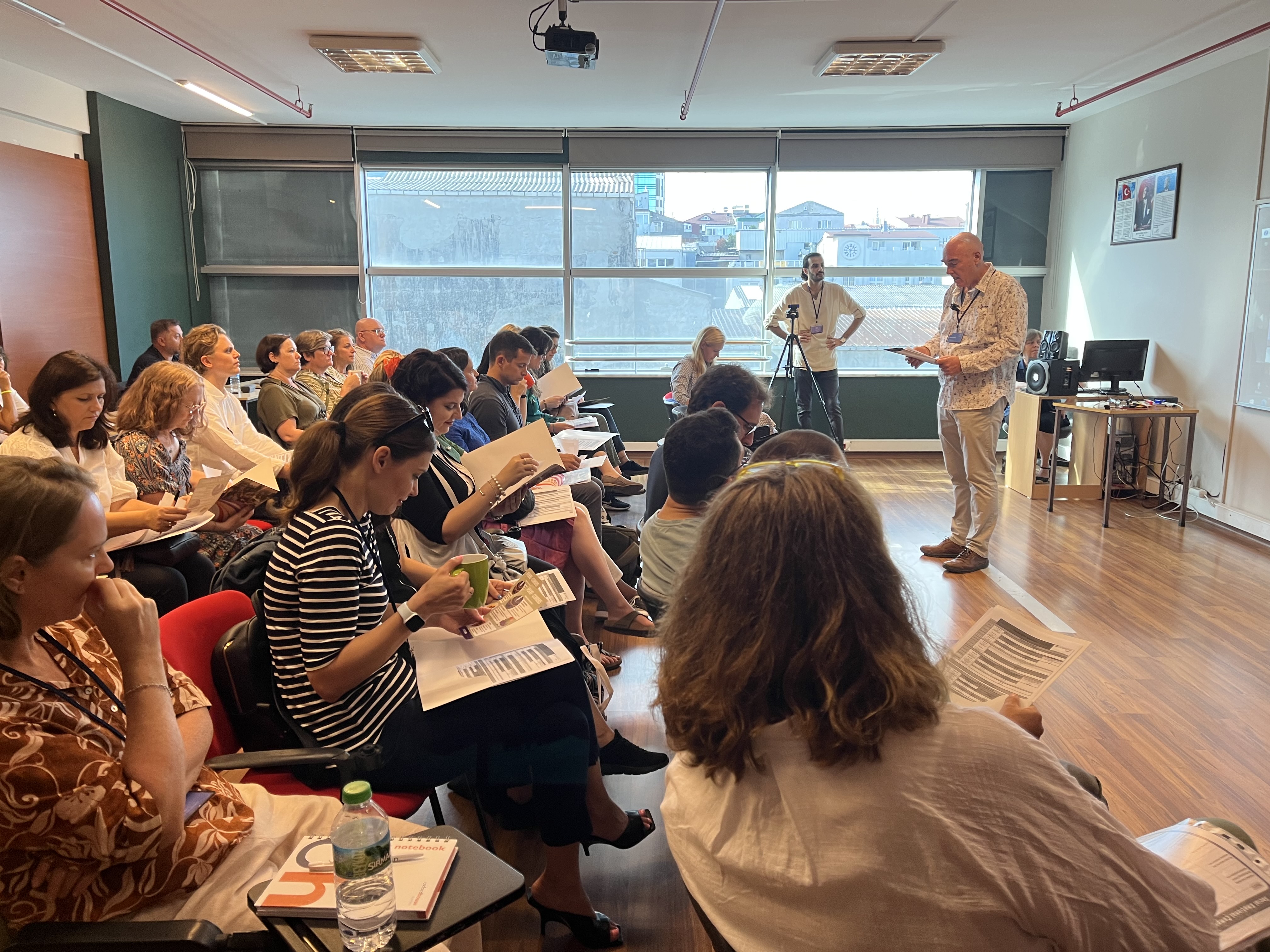
The workshop seemed to go well, the participants (at least the vocal majority) appeared engaged and participated in the activities with enthusiasm. After the workshop I had a familiar dialogue:
Me: Did you enjoy the workshop?
Participant: Oh yes thank you. It was a lot of fun.
Me: Would you use any of these activities in your class?
Participant: (looking quizzical). Err.. no I don’t think so.
Me: Why not?
The responses to this question can vary from: I don’t have enough time, the curriculum is too heavy, there is not enough time, I need to follow the book, I am not experienced enough, my students wouldn’t behave, that’s not my style of teaching, I need more training, it would be chaos, parents would complain and so on. I am left wondering why the teachers are not addressing these issues in their professional development meetings rather than recruiting an external teacher educator to do a workshop on a topic not of their choosing.
We sorely need a framework and methodology for participant-led, solution-oriented teacher professional development. One solution, I believe, lies in developing facilitation skills for teacher educators. Facilitation is a form of expression which enables shared ownership of decision-making processes and aims to generate dialogue, reflection and community cohesion. Adapting the principles of Applied Theatre, I have explored the development of facilitation skills in a series of workshops for teachers at our training centre in Istanbul.
How I develop facilitation skills and set up ‘Community Forums’ for teacher development will be explained in part 2. However here is a sneak preview video.

 Tom Godfrey
Dear Tom,
I think your observations are to the point. The reason as to why these schools/universities invite speakers is because they just want to keep their workers (teachers) busier as if they are not, under the umbrella term “professional development activities.” They want to make them feel they are learning something while, in real, teachers are concerned about being able to finish the book on time, catch up with the program, give as many quizzes and exams as possible, and other nitty gritty stuff that always keeps them busy.
The system has to change, actually not only the system but the mindset of teaching has to change. We think teaching is about rushing through pages and finish as many pages and exercises and activities as possible. Instead, we have to take some time to make it more meaningful for students.
Best,
–Serdar D.
I agree. It is all standardized- as if learning is similar to making McDonalds hamburgers