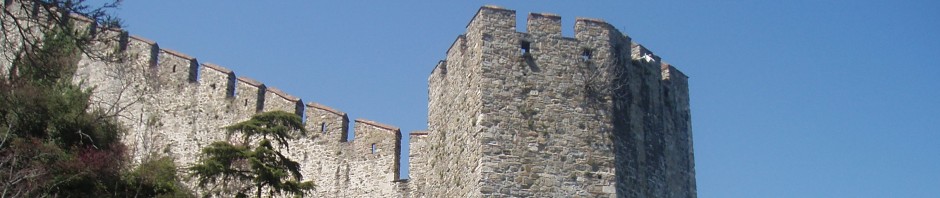

Development Plans for my favourite holiday destination
Everybody is talking about the new development plans. It is the hottest topic in all the cafes, like the one in the picture. I wonder what is your opinion!
The Genre Approach to develop writing skills.
Introduction.
This is one of my favourite lesson plans. I created the lesson around the context of a small fishing village on the Black Sea coast of Turkey faced with plans for a huge holiday complex to be developed in the village. The lesson could, of course, be built around any similar scenario such as a ski resort in an alpine village or a nuclear power station in a rural village. I have a similar lesson about a new bridge being built over a site of natural beauty. The lesson works on several levels but is essentially constructed to provide an opportunity to develop productive skills – speaking and writing.
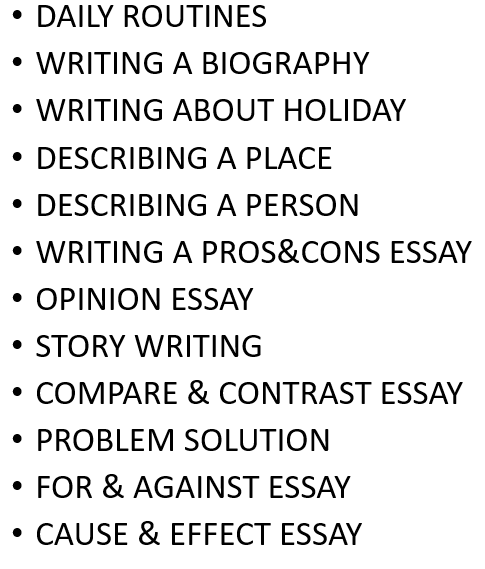
In terms of writing tasks, the following rhetorical styles are covered:
The lesson consists of a series of stages although as with any lesson these are a flexible outline and need to be adapted to the level and needs of the group. Some of the key stages are:
- Setting the scene: using a visualization to arouse learners interest and personalise the topic of “favourite holiday destinations”. Learners first visualize their favourite holiday and then describe it to their partner.
- Prediction and pre-reading stages: introducing my favourite holiday destination and introducing the village of Binkilic. Asking learners to brainstorm the advantages and disadvantages of the proposed holiday complex development plan.
- Reading: learners read a variety of text types: a description of the village; the proposed plans. These texts serve to build the context by providing further information, exposing learners to key lexis and concepts and providing a model for their own writing.
- Analysis and planning: learners are provided with handouts that provide a template to plan their writing. The templates provide an overall framework and key functional language.
- Role Play: The lesson builds in stages for role plays where the learners take on the roles of the villagers and conduct a meeting in the village hall to decide on their future.
Methodology
The underlying principle of the lesson is that language production needs to take place in a context so the activities and tasks have an authenticity of purpose (a reason to communicate ones views). It conceives of productive skills (speaking and writing) as a social activity and adopts a genre approach. In other words, the primary focus for the development of productive skills is situated in the communicative purpose: in terms of writing we firstly need to consider who we are writing to (the audience) and what we are trying to achieve (the purpose).
There are five categories of knowledge that learners need in order to write effectively:
- Content knowledge: ideas and concepts in the topic area the text will address
- System knowledge: syntax, lexis, appropriate formal conventions needed
- Process knowledge: how to prepare and carry out a writing task.
- Genre knowledge: communicative purposes of the genre and its value contexts.
- Context knowledge: readers’ expectations, cultural preferences and related texts.
The advantages of a Genre Approach.
The first part of the lesson builds the context. Introducing the concept of favourite holiday destinations and describing my favourite holiday place, the village of Binkilic. The scenario develops when we introduce the development plans for a huge modern holiday complex that will change the traditional village life. The context is vital as it provides meaning to the language: without a context the learners have no clues to meaning. Learners use contextual information to understand individual words – ‘destination’, ‘development plan’, ‘facilities’, ‘traditional life’ and so on but also to understand the relationship between the words and concepts. ‘Describe’ your favourite holiday is meaningful having visualized it, talking about causes and effects makes sense when we learn that a development plan is going to radically change the traditional village life.
There are a series of writing tasks in the lesson.
- Write a description of your favourite holiday place for a holiday brochure.
This first writing activity adapts a traditional ‘product’ approach. Learners first visualize their favourite holiday destination and then describe it orally to their partners. Then they read and analyse a model text noticing the lexis and organization. The genre is typical of a holiday brochure first describing the location and highlighting its attractions and then the second paragraph states the advantages for visitors. Learners use this text as a template for writing their own description.

This is a guided writing task in which learners use the text as a template substituting their own ideas while following the text’s structure, organization and lexical phrases. The advantage of this approach is that learners analyse an authentic model, errors are minimized as learners imitate the organizational structure of the model.
- Advantages / Disadvantages of the development plan. Write a report.

This writing task is essentially a brainstorming task. The learners brainstorm advantages and disadvantages of the development plan. Half the class brainstorms pros and the other half cons. Then learners are paired pros and cons to share their ideas and try to convince their partner (this creates the need to justify their points with reasons and examples). Learners in pairs now write their pros and cons in a report. The report genre lends itself to bullet points. Learners are provided with the functional language as illustrated below.
- Compare / contrast: How do the development plans compare with the present? What are the similarities and differences?
This writing task is a guided writing based on two example sentences. Learners are asked to compare a diagram of the current village with the development plans and write sentences based on the example sentences provided. This can be done in pairs.

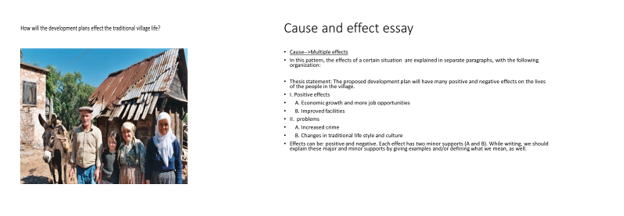
- Cause and effect: How will the proposed changes effect life in the village?
This writing task guides learners in the organization and structure of a typical cause and effect essay. The learners are provided with a template and try to complete it by adding examples to support their statements. The task provides the organization and key language while the learners complete the content.
- Opinion letter: Write your opinion about the proposed development plan to your local newspaper.
After the role play stages in which the villagers share their opinions and discuss the development plans in a meeting, the learners write a letter to the local newspaper stating their opinions. This is a free writing activity but it provides an opportunity for learners to use all the rhetorical styles practiced earlier in the lesson.
These are some of the writing tasks that lend themselves most naturally to the context but there are many other tasks I considered that could also be included: describe a typical day in your life (daily routines) – while imagining they are the character on their role card, learners envisage and write about a typical day.
Pedagogically, authentic moral dilemmas provide a rich context for language input. Once students are familiar with the outline scenario and content, the situation provides a model to focus on structure, lexis and phonology and provides a ready context for follow-up writing and speaking activities. Learners explore issues, events and relationships through improvised role plays and discussion. Typically contexts are presented in course materials in a static and lifeless manner, as content to be absorbed; however every effective teacher understands that real learning is not generated by the materials but is generated by co-construction and negotiation between teachers and learners in a lived experience which is why every lesson is unique and learning outcomes unpredictable.
Context knowledge. Psychologically the dilemma between maintaining traditions and accepting change, as depicted in the Binkilic scenario, represents a part of human consciousness that exists in all cultures and invariably evokes a personal response. Each learner responds differently as their relationship with the dilemma depends on their own interpretation of the world. Not only does the cultural, social, sexual and physiological make up of the classroom impact on learners’ responses, but also each individual learners’ struggle with contradictory viewpoints of the world. Paulo Freire (1970) claims that at the heart of education is an ability to help learners (and teachers) to reflect and act upon the world, and through that transform it into a better place.
The advantages of a Genre Approach.
A Genre Approach takes as its starting point ‘life’ not language and by so reversing the learning process, that is, by beginning with meaning and then moving to language later we are able to draw on the full range of a learners’ multiple intelligences and exploit learning as a ‘whole-person’ approach. The lesson builds on the input of the personalities, energy and ideas of the participants, so is alive and always changing and evolving. Because of this no two lessons are the same, and the level and quality of the work is determined by the nature of the group.
- Driven by inquiry. Although based on an imaginary fictitious scenario, the theme explores authentic and emotive dilemmas: should parks be destroyed to build shopping centres? Should the rain forest be cut down for cattle grazing? Should villages be flooded to build dams? Scenarios arouse genuine passion and strong, emotive learner responses.
- Meaning is ‘learner generated’ through their responses to the scenario and not transmitted from an external source.
- The lesson stages are logically sequenced and yet the structure is flexible as it depends on unpredictable learner responses. The method is powered by risk-taking as the process relies on challenging learners to respond and engage with the materials and issues raised. Each time I do this lesson the views expressed are different and the outcomes vary both in terms of language output and opinions stated.

 Tom Godfrey