
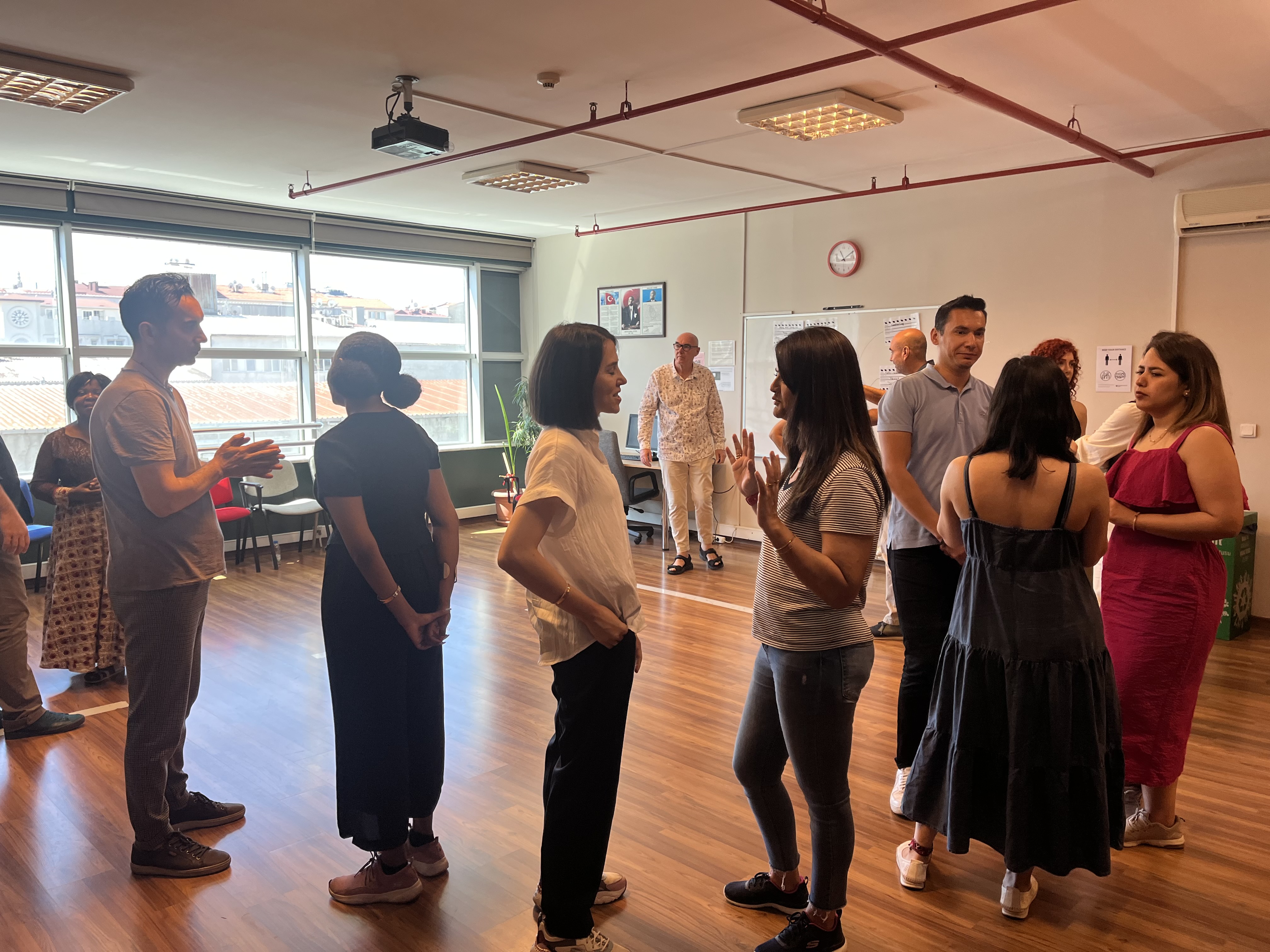
I suspect all educators agree that if a learner is not ‘engaged’ then learning is unlikely to occur. However what do we mean by an ‘engaged’ learner? Engagement cannot be switched on and off; it requires building over time. Engagement is a spectrum ranging from passive presence at one end to complete absorption in learning at the other. True engagement spans the physical, mental, emotional, and social needs of learners. As educators, our task is to nurture holistic engagement.
On our Teaching Artistry course, we considered what it actually means to be an ‘engaged learner’ and how can educators foster this engagement. Here are the key themes and insights from the participants:
- Clear Goals and Interest: An engaged learner understands their purpose in the classroom and has clear goals. This individual is genuinely interested in the topic, which fuels their engagement and participation. As Ilesbek Ashuraliev noted, an engaged learner and teacher are “fully aware why they are in the classroom, they have clear goals and most importantly, they are genuinely interested in the topic of the lesson.”
- Active Participation: Engaged learners actively participate in class activities, ask questions, and seek additional information. They demonstrate curiosity and eagerness to understand the subject matter deeply. Sha Moheb described an engaged learner as someone who “actively participates and shows a strong interest in the learning process… contributes actively in class, asks questions, seeks additional information, and applies their knowledge to real-world situations.”
- Emotional and Mental Investment: Engagement goes beyond mere participation. It involves emotional and mental investment in the learning process, where learners find the material significant and relevant to their personal or professional growth. Kadir Özsoy highlighted that an engaged learner “emotionally invests in the educational process with a genuine belief in its significance and relevance to their personal or professional development.”
- Ongoing Interaction and Reflection: Engaged learners maintain continuous interaction with the subject matter and their peers. They reflect on what they have learned and apply this knowledge in real-world situations. Oksana Yeshyorkina Baylan mentioned that an engaged learner “not only pays attention, participates in activities, and completes exercises during a lesson, but also applies gained knowledge and uses the language after the lesson.”
- Positive Attitude and Motivation: A positive attitude towards learning and high internal motivation are crucial. Engaged learners inspire others, take initiative, and exhibit a persistent drive to explore and understand. Yaprak Yilmaz Gardner Harlley shared that an engaged student is “curious, open to learning, asking questions, seeking answers, and not satisfied until they reach the knowledge.”
- Practical Application and Perspective Change: They not only absorb theoretical knowledge but also apply it practically, gaining new perspectives and insights after each learning experience. Pelin Karagöz emphasized that an engaged learner “puts the theory into practice and gains a new perspective after each class.”
- Teacher’s Role in Engagement: An engaged teacher is equally important. They plan meticulously, conduct thorough research, and create a stimulating learning environment. They actively monitor and provide feedback, reflecting on the effectiveness of their teaching. Nada Kataw stated that an engaged teacher “does a lot of research and study about the topic before the class… monitors actively and provides individual feedback, then reflects on how the lesson went after the lesson.”
In summary, an engaged learner is characterized by their active and enthusiastic participation, emotional and mental investment, continuous interaction and reflection, positive attitude, and practical application of knowledge. Both learners and teachers play crucial roles in fostering an environment that promotes engagement.
By understanding and nurturing these qualities, educators can enhance the learning experience, making it more meaningful and impactful. If you want to find out about practical activities that can be incorporated into your lessons register for our Teaching Artistry online course.

 Tom Godfrey