
What do I mean by “embodied approaches”? For me, it signifies the essence of a teacher’s presence – not just mentally or socially, but also physically. It encapsulates the convergence of the teacher’s physical and mental presence, the learners’ involvement, and the dynamic interplay between them. This ’embodied presence’ is the fulcrum upon which meaningful learning pivots. When engagement is full, genuine learning flourishes. Thus, being ’embodied’ entails a holistic immersion – mind, body, and spirit – into the teaching and learning process.
Why Teaching is an Art
I assert that teaching requires skills akin to those of an artist rather than a scientist. Here are my four primary reasons:
- Heuristic Nature: Teaching involves making judgments in real-time, during the act of teaching itself.
- Improvisation: It is heavily influenced by unpredictable contingencies, demanding spontaneous responses and adaptations.
- Embodied Engagement: Teaching necessitates both physical and emotional involvement.
- Emergent Achievements: Learning outcomes are not predefined but emerge through the teaching process.

However, herein lies a paradox. Traditional teacher education predominantly focuses on the procedural aspects of teaching. It emphasizes how to plan lessons, delineate aims, and implies a standardized methodology to be adhered to.
During the pandemic, the educational landscape underwent a seismic shift as teaching transitioned entirely online, rendering it, in a sense, “bodyless.” Both teachers and learners found themselves devoid of physical presence, compelling us to redefine the concept of ‘presence’ as it is mediated through technology.
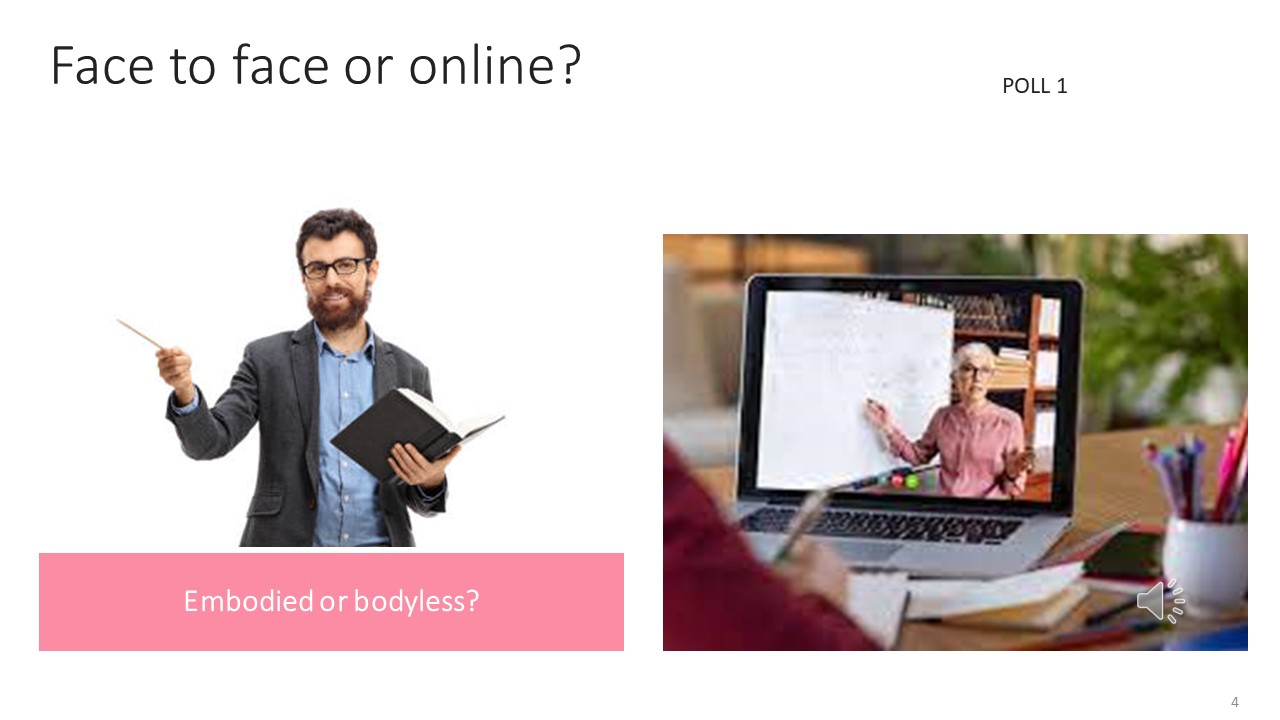
These pivotal moments ignited reflections on the essence of teaching and learning. Are teachers merely conveyors of knowledge, or is their role more intricately woven into aiding learners’ comprehension and growth? Is learning merely about acquiring new information, or does it encompass practical application and behavioral transformation? The answers to these fundamental queries fundamentally shape the type of teacher one aspires to become.
From my observations of teachers, I’ve noticed a spectrum. At one end, we have those who perceive their role as purveyors of information, emphasizing a ‘competence model’ in their teaching approach. These teachers center their lessons around predefined aims, materials, and procedures, resulting in static, teacher-centered, and content-driven classes.
Conversely, at the other end, there exist educators who view themselves as facilitators of learning, embracing what I term the ‘performance model.’ They craft lessons within authentic contexts, prioritize personalization, and foster dynamic, learner-centered, and communication-focused environments.

In essence, teachers encompass three vital elements: their ‘head,’ housing theories and knowledge; their ‘body,’ which learns through the practical experience of teaching; and their ‘heart,’ the unique personality that defines their approach and connection with students. So what kind of teacher are you? How can you develop to become the teacher you want to be?
Stay tuned for the second part, where we will explore how we can reflect on our sense of identity and develop skills to transform into the teacher we aspire to be.

 Tom Godfrey